Quick Answer
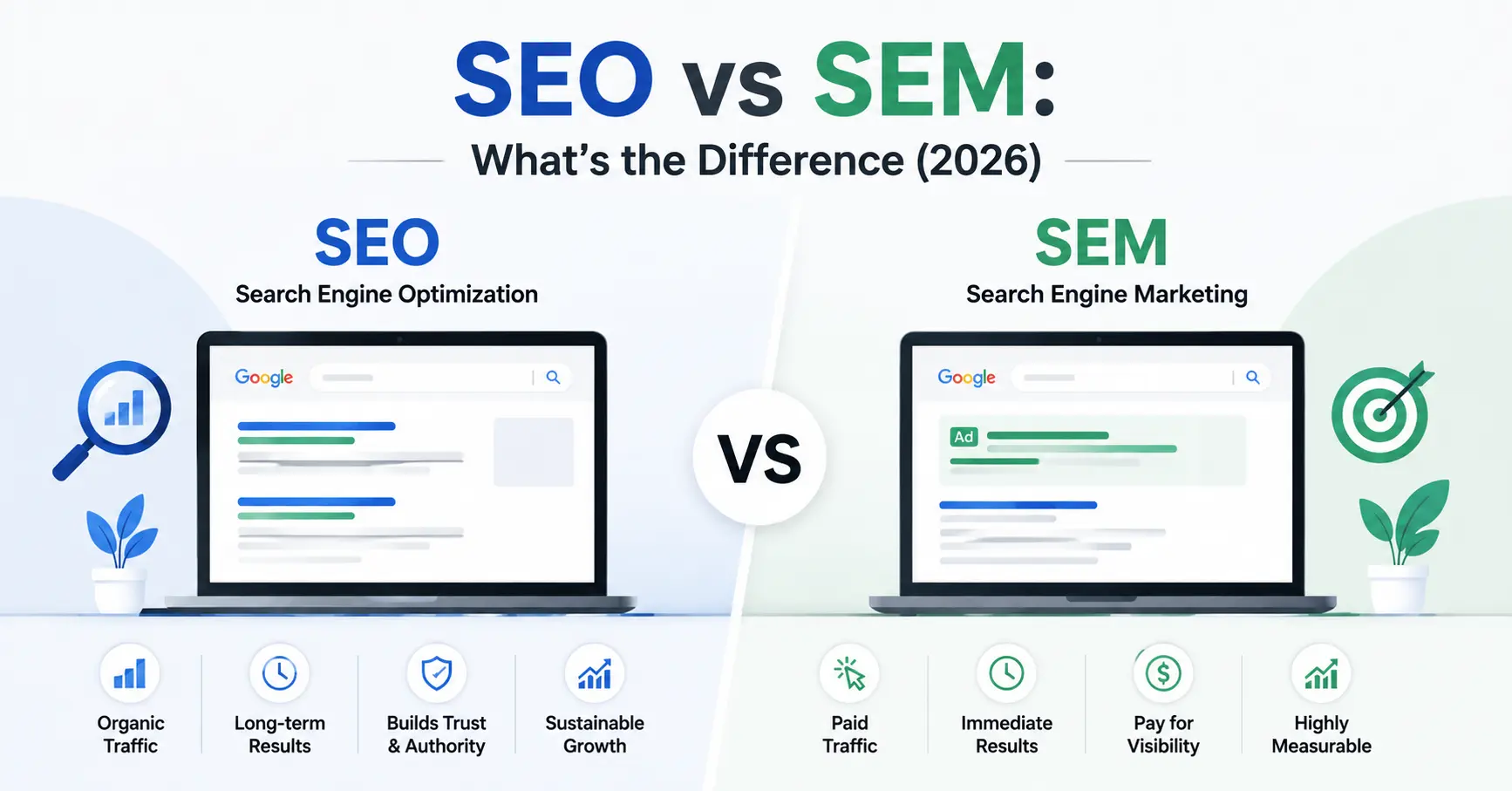
SEO vs SEM comes down to one simple difference: SEO (Search Engine Optimization) gets you free, organic traffic by improving your website over time, while SEM (Search Engine Marketing) gets you instant traffic through paid ads on search engines like Google. SEO is slower but builds long-term results at low cost. SEM is faster but stops working the moment you stop paying. Most businesses eventually use both together, but knowing the difference matters, especially when you’re deciding where to spend your time or budget first.
What Is SEO?
SEO stands for Search Engine Optimization. It’s the process of improving your website’s content, structure, and technical setup so it ranks higher in organic (unpaid) search results. If you’re new to this, our What Is SEO? guide covers the basics in more detail.
SEO includes things like:
- Writing content around what people actually search for
- Fixing technical issues so Google can crawl and index your pages properly
- Building backlinks from other trusted websites
- Optimizing titles, meta descriptions, and page structure
SEO takes time usually months but once you rank well, you keep getting traffic without paying for each visitor.
What Is SEM?
SEM stands for Search Engine Marketing. In its broadest sense, SEM technically includes both SEO and paid ads, but in everyday use, most people use “SEM” to mean paid search advertising specifically things like Google Ads, where you pay every time someone clicks your ad.
SEM includes:
- Pay-per-click (PPC) ads that appear at the top of search results
- Shopping ads for e-commerce products
- Display and remarketing ads shown across the web
Unlike SEO, SEM delivers traffic immediately. As soon as your campaign goes live, your ad can appear at the top of search results but that visibility disappears the moment you stop paying.
SEO vs SEM: Key Differences
Here’s where the SEO vs SEM comparison really matters understanding what you’re actually trading off between the two.
| Factor | SEO | SEM |
|---|---|---|
| Cost | Free traffic, but requires time investment | Costs money per click |
| Speed | Slow takes months to see results | Fast results appear immediately |
| Longevity | Long-term, keeps working after ranking | Stops the moment you stop paying |
| Trust | Often seen as more trustworthy by users | Some users skip ads entirely |
| Control | Harder to control exact rankings | Full control over budget and targeting |
| Best for | Long-term brand building | Quick campaigns, product launches, testing |
When Should You Use SEO vs SEM?
The right choice in the SEO vs SEM decision depends on your goals, budget, and timeline.
Choose SEO if:
- You’re building a long-term website or brand
- You have more time than budget
- You want sustainable traffic that doesn’t disappear when spending stops
Choose SEM if:
- You need traffic immediately, like for a product launch or time-sensitive offer
- You have a marketing budget to spend on ads
- You want to test which keywords actually convert before investing in long-term SEO
A good starting point for most new websites: understand your audience through keyword research first this helps whether you go the SEO route, the SEM route, or both.
Can You Use SEO and SEM Together?
Yes, and most established businesses do exactly that. A common approach:
- Use SEM to get immediate traffic and test which keywords and messaging actually convert
- Use those insights to guide long-term SEO content
- Let SEO gradually take over as your organic rankings improve, reducing dependence on ad spend over time
This combination gives you the best of both instant visibility from SEM while you build the long-term, free traffic that SEO provides.
Frequently Asked Questions
Is SEO or SEM better for a new website?
For most new websites with limited budgets, SEO is usually the better long-term investment. SEM can help if you need immediate visibility while your SEO efforts are still building up.
Does SEM help SEO rankings?
Not directly. Paid ads don’t influence your organic ranking position. However, SEM can help you discover which keywords perform well, which can guide your SEO content strategy.
Is SEM more expensive than SEO?
SEM has direct, ongoing costs since you pay per click. SEO doesn’t have a direct cost per visitor, but it does require time and effort, which has its own value.
Can I stop SEM and still keep my traffic?
No. Once you stop paying for SEM campaigns, that traffic stops almost immediately. This is the biggest difference from SEO, where results tend to hold or keep growing even after the initial work is done.
Final Takeaway
The SEO vs SEM debate isn’t really about which one is better it’s about what you need right now. SEO builds slow, lasting results at a low direct cost. SEM delivers fast, controllable traffic at a price per click. Most businesses eventually benefit from using both, but understanding this difference helps you decide where to focus first.
At My Info Mint, we are not affiliated with any brand, product, or service mentioned on our website. Our goal is to provide informative and research-based content to help our readers. Please verify all product details on the official website before making any purchase. Readers are advised to make decisions at their own discretion.