Quick Answer
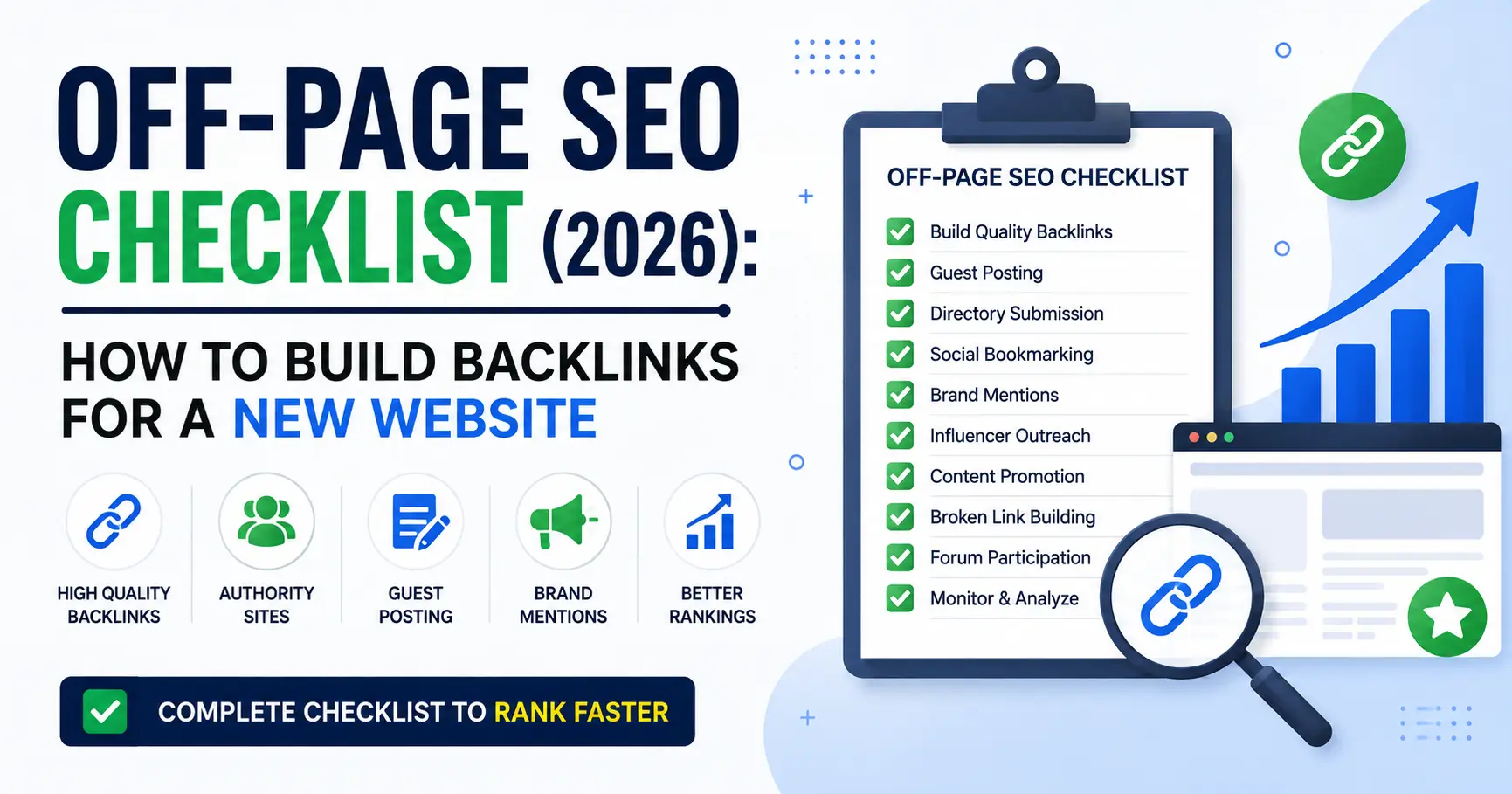
This off-page SEO checklist covers the actions you take outside your own website to build trust with Google — mainly backlinks, but also brand mentions, social signals, and reviews. For a new website, the priority order is: get a few honest, relevant backlinks first, avoid spammy link schemes, and be patient. Off-page SEO takes longer to show results than on-page or technical SEO, but it’s often the missing piece for sites that are indexed correctly but still not ranking.
What Is Off-Page SEO (And Why It Matters More Than You Think)
If you’ve already gone through our On-Page SEO Checklist and Technical SEO Checklist, your website content and structure are probably in good shape. But if you’re still not ranking, off-page SEO is usually the missing piece.
Off-page SEO means everything that happens outside your website that affects how Google sees you mainly:
- Backlinks — other websites linking to yours
- Brand mentions — your website or business name being talked about online, even without a link
- Social signals — shares, engagement, and visibility on social platforms
- Reviews and citations — especially important for local or business websites
Out of all of these, backlinks remain the strongest ranking factor. A backlink from a trusted, relevant website tells Google: “this site is worth trusting too.” New websites almost always start with zero backlinks, that’s normal, but it’s also exactly why new sites struggle to rank even with good content.
Off-Page SEO Checklist for New Websites
Use this order. Don’t skip ahead to advanced tactics before the basics are done.
1. Fix Your Foundation First
Before chasing backlinks, make sure your site is actually worth linking to:
- Confirm your pages are indexed (check our Google Search Console Guide if you haven’t set this up yet)
- Make sure your on-page SEO is solid, titles, meta descriptions, and keyword usage
- Confirm your keyword research actually matches what your target audience searches for, so the content you’re promoting is genuinely useful
A backlink pointing to a weak, unindexed, or irrelevant page wastes the effort.
2. Get Listed in Relevant Directories
This is the easiest, safest starting point for a brand new site:
- Submit to Google Business Profile (if it’s a local or service-based business)
- Submit to niche-relevant directories in your industry
- Avoid generic, low-quality directory spam sites, these can hurt more than help
3. Write Guest Posts on Relevant Websites
- Find blogs in your niche that accept guest contributions
- Pitch a genuinely useful article idea, not just “let me post here for a link”
- Include one natural, relevant link back to your site within the content
This is slower than buying links, but it’s the method that actually holds up long term.
4. Get Mentioned by Answering Questions Publicly
- Answer relevant questions on forums like Reddit or Quora where your website genuinely adds value
- Don’t drop links everywhere, most of these platforms penalize obvious self-promotion
- Focus on being genuinely helpful; a link is a bonus, not the goal
5. Reach Out for Broken Link Replacement
- Find pages in your niche with broken/dead links (tools like Ahrefs or free browser extensions can spot these)
- Contact the site owner, point out the broken link, and suggest your relevant page as a replacement
This works well because you’re solving a problem for them, not just asking for a favor.
6. Build Relationships, Not Just Links
- Follow and engage genuinely with other creators in your niche
- Comment thoughtfully on their content
- Over time, natural link opportunities come from real relationships more than cold outreach
7. Track What’s Working
- Use Google Search Console’s Links report to see which backlinks Google has already found
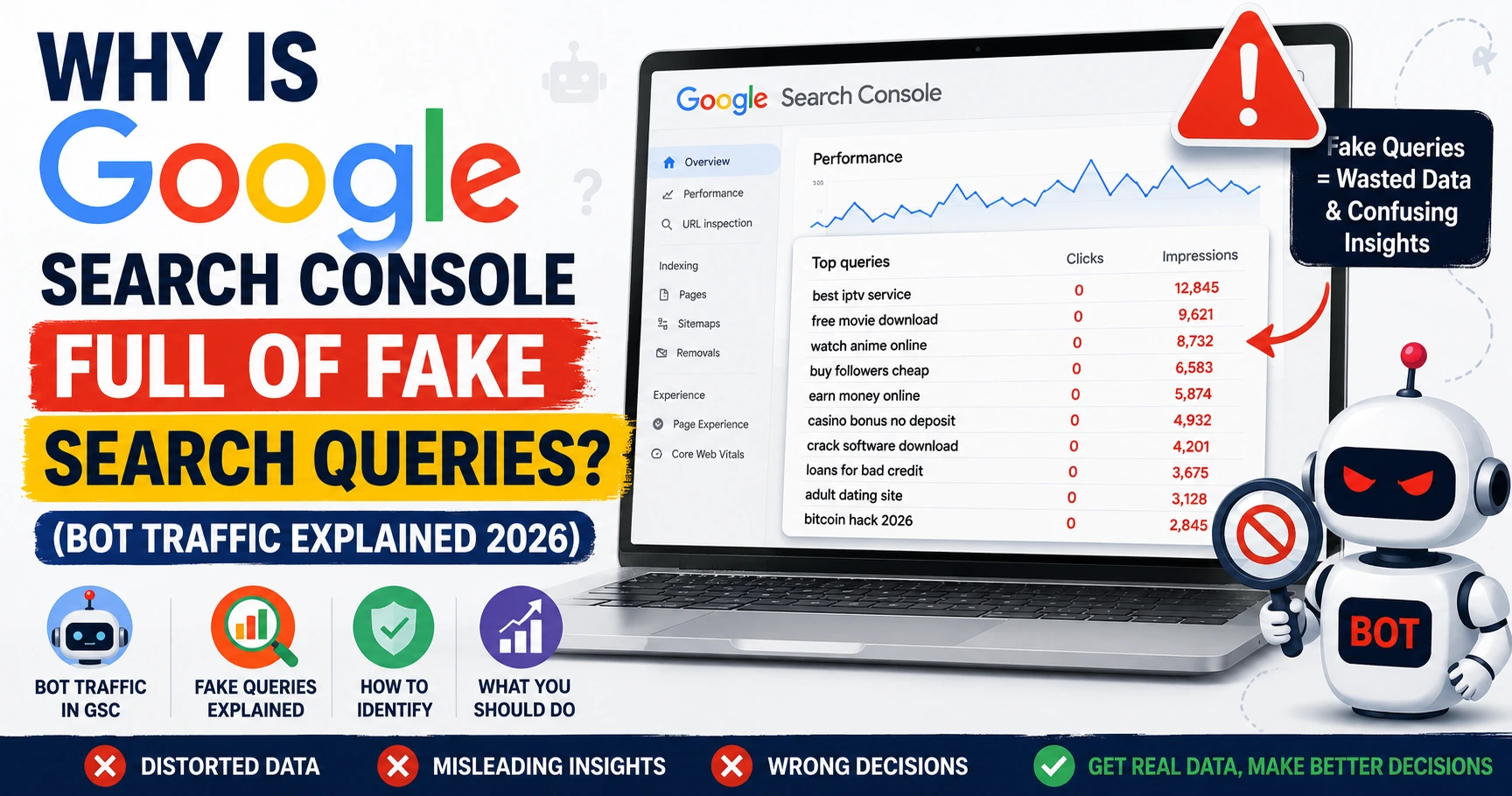
- Watch for spammy or irrelevant backlinks pointing to your site, these can happen from bots or scrapers, similar to the fake bot search queries we covered in our Google Search Console Guide
- If you see harmful spam backlinks, you can disavow them through Search Console, but only do this if you’re sure they’re actually damaging, most small amounts of spam links don’t need action
What to Avoid (Common Off-Page SEO Mistakes)
- Buying backlinks in bulk. Google can detect unnatural link patterns, and this can get your site penalized instead of ranked.
- Link exchanges (“I’ll link you if you link me”) done at scale. A few genuine ones are fine; doing this systematically looks manipulative to Google.
- Comment spam. Dropping your link in blog comments across hundreds of sites does nothing for rankings and can flag your site as spammy.
- Ignoring relevance. A backlink from a site completely unrelated to your niche carries far less value than one from a relevant, trusted source, sometimes it carries no value at all.
How Long Does Off-Page SEO Take to Work?
Be realistic here. Off-page SEO is the slowest part of SEO to show results:
- On-page and technical fixes can show impact within weeks
- Backlink-driven ranking improvements typically take 3 to 6 months, sometimes longer for competitive topics
- Consistency matters more than speed, a steady trickle of genuine backlinks over months beats a burst of low-quality links all at once
If you understood search intent and built content around it, and your on-page and technical SEO are solid, off-page SEO is what finally pushes you from “indexed but invisible” to actually ranking.
Frequently Asked Questions
What’s the difference between on-page and off-page SEO?
On-page SEO covers everything you control directly on your website content, titles, structure. Off-page SEO covers things outside your site, mainly backlinks and brand mentions, that build trust and authority with Google.
How many backlinks does a new website need?
There’s no fixed number. Quality and relevance matter far more than quantity. A handful of genuine, relevant backlinks outperform hundreds of spammy ones.
Can I do off-page SEO for free?
Yes. Directory listings, guest posting, forum participation, and broken link outreach all cost time, not money. Paid backlinks and PR services exist, but they’re not required to start.
Is off-page SEO more important than on-page SEO?
Neither works well without the other. On-page and technical SEO make sure Google can properly read and index your content. Off-page SEO builds the trust needed to actually rank once that foundation is in place.
Final Takeaway
This off-page SEO checklist works best as your next step after fixing on-page and technical issues not as a replacement for them. For a new website, focus on genuine, relevant backlinks over volume, avoid shortcuts that risk penalties, and expect results to build gradually over months, not days.
At My Info Mint, we are not affiliated with any brand, product, or service mentioned on our website. Our goal is to provide informative and research-based content to help our readers. Please verify product or service information on the official website before making any decisions. The information provided is for educational purposes only.