Introduction
Imagine writing a detailed blog post, publishing it with the perfect keywords, and still watching it struggle to rank on Google. In many cases, the problem isn’t the quality of your content—it’s that it doesn’t match what users are actually looking for. That’s where search intent becomes one of the most important concepts in modern SEO.
Search intent refers to the reason behind every search query. When someone types a question, product name, or service into Google, they expect a specific type of answer. Google’s goal is to understand that expectation and display the most relevant results. If your content aligns with that intent, you have a much better chance of ranking well, increasing organic traffic, and satisfying your audience.
In 2026, search intent is even more critical because search is no longer limited to Google. AI-powered platforms like ChatGPT, Google Gemini, Claude, Microsoft Copilot, and Perplexity also prioritize content that clearly answers user questions with authority and relevance.
In this comprehensive guide, you’ll learn what search intent is, why it matters, how search engines interpret it, and how you can optimize your content to meet user expectations while improving your SEO performance.
What Is Search Intent?
Search intent, also known as user intent or keyword intent, is the primary goal a user has when entering a search query into a search engine.
In simple terms, it answers one question:
“What does the user actually want?”
For example, if someone searches:
- What is SEO?
- Best laptops under $1,000
- Buy iPhone 17
- Facebook login
Each query has a completely different purpose. Some users want information, others want to compare products, while some are ready to make a purchase or visit a specific website.
Understanding these goals allows search engines to deliver the most relevant results.
Instead of focusing only on keywords, modern SEO focuses on matching the intent behind those keywords.
Simple Definition
Search intent is the purpose behind a user’s search query and the type of information or action they expect from the search results.
Real-World Example
Imagine you’re hungry and search:
“Best pizza near me”
You don’t want:
- The history of pizza
- A pizza recipe
- Nutritional facts
You want nearby pizza restaurants that are open, highly rated, and easy to reach.
Google understands this intent and displays:
- Local Map Pack
- Restaurant listings
- Reviews
- Directions
- Business hours
- Photos
This is an example of Google matching search results to user intent rather than simply matching keywords.
Another Example
Consider the keyword:
“Apple”
Without understanding intent, it’s impossible to know whether the user means:
- Apple Inc.
- Apple fruit
- Apple Store
- Apple customer support
- Apple stock price
Google analyzes additional signals, such as search history, location, trending topics, and common user behavior, to determine the most likely meaning.
Why Search Intent Is More Important Than Keywords
A decade ago, SEO often focused on repeating keywords throughout a page. Today, search engines are far more advanced.
Modern algorithms evaluate:
- The meaning behind a query
- The context of the search
- User satisfaction
- Content relevance
- Topical authority
- User engagement signals
As a result, two pages targeting the same keyword can perform very differently if only one truly satisfies the user’s intent.
Search Intent vs Keywords
| Keywords | Search Intent |
| Focuses on words users type | Focuses on why users search |
| Matches exact phrases | Matches user expectations |
| Traditional SEO factor | Modern ranking factor |
| Can be identical across searches | Can vary depending on context |
| Easy to identify | Requires SERP analysis |
Example
Keyword:
Digital Marketing
Possible intents:
- Learn digital marketing
- Take a digital marketing course
- Hire a digital marketing agency
- Read industry news
The keyword stays the same, but the intent changes completely.
Why Search Intent Matters
Search intent is one of the strongest indicators of whether your content will satisfy users. Google aims to deliver the most helpful result for every query, so pages that closely match user intent are more likely to earn higher rankings, better engagement, and increased visibility.
Simply targeting a keyword is no longer enough. Your content must answer the question, solve the problem, or support the action the searcher expects.
1. Higher Google Rankings
When your content aligns with search intent, Google recognizes it as a better match for the query.
For example, someone searching “how to improve website speed” expects a practical guide with actionable steps. If your page provides clear instructions, useful examples, and easy-to-follow advice, it is more likely to outperform a page that only offers a general overview.
2. Improved User Experience
Visitors are more likely to stay on your page when they immediately find relevant information.
This leads to:
- Longer session durations
- Lower bounce rates
- Increased trust
- Higher return visits
Meeting user expectations creates a positive experience, which supports long-term SEO success.
3. Better Conversion Rates
Intent-driven content attracts visitors at different stages of the customer journey.
For example:
- Informational searches help educate potential customers.
- Commercial searches support product comparisons.
- Transactional searches encourage purchases or sign-ups.
When your content matches the user’s readiness to act, conversions naturally improve.
4. Stronger Topical Authority
Publishing multiple articles that address different search intents around the same subject helps establish topical authority.
For example, a website covering SEO could create separate articles on:
- Keyword research
- On-page SEO
- Technical SEO
- Search intent
- Link building
Together, these articles signal comprehensive expertise on the topic.
5. Better Performance in AI Search
AI-powered search tools summarize content that provides direct, accurate, and well-structured answers.
Content that clearly satisfies search intent has a better chance of appearing in:
- Google AI Overviews
- ChatGPT responses
- Gemini summaries
- Claude recommendations
- Perplexity citations
How Google Understands Search Intent
Google’s mission is to organize the world’s information and present the most helpful results for every search. To achieve this, it doesn’t rely solely on matching keywords. Instead, it analyzes the intent behind each query using advanced algorithms, language models, and user behavior signals.
Over the years, updates such as Hummingbird, RankBrain, BERT, and MUM have significantly improved Google’s ability to understand natural language and context.
1. Query Analysis
Google first analyzes the wording of a search query.
For example:
- “How to bake sourdough bread” suggests the user wants a step-by-step guide.
- “Buy running shoes online” indicates purchase intent.
- “Nike customer support” implies the user wants to reach a specific website.
The phrasing provides strong clues about the expected result.
2. Search Context
The same keyword can have different meanings depending on context.
Google considers factors such as:
- User location
- Device type
- Search history (when available)
- Current trends
- Language settings
- Time of day
For instance, a search for “coffee shop” on a mobile phone is more likely to produce nearby local businesses than general articles about coffee.
3. SERP Feedback
Google continually evaluates how users interact with search results.
Signals may include:
- Which result users choose
- Whether they quickly return to the search page
- How long they engage with the content
- Whether they refine their search
These patterns help Google determine whether a page successfully satisfied the user’s intent.
4. Natural Language Understanding
Modern AI models enable Google to understand relationships between words rather than relying on exact keyword matches.
For example, Google recognizes that these searches are closely related:
- Improve website speed
- Make my website faster
- Speed up WordPress site
Although the wording differs, the underlying intent is the same.
5. Content Quality Signals
Google also evaluates the content itself.
Helpful pages typically include:
- Clear headings
- Accurate information
- Practical examples
- Updated content
- Credible sources
- Logical organization
Content that thoroughly addresses the user’s needs is more likely to rank well.
Expert Insight
Successful SEO is no longer about writing for search engines alone. It is about understanding the questions, problems, and goals behind every search. When your content consistently fulfills those needs, you create a better experience for readers and that is exactly what modern search engines reward.
The Four Types of Search Intent
Every search query falls into one or more categories based on what the user wants to accomplish. Understanding these categories helps you create content that satisfies user expectations and improves your chances of ranking higher.
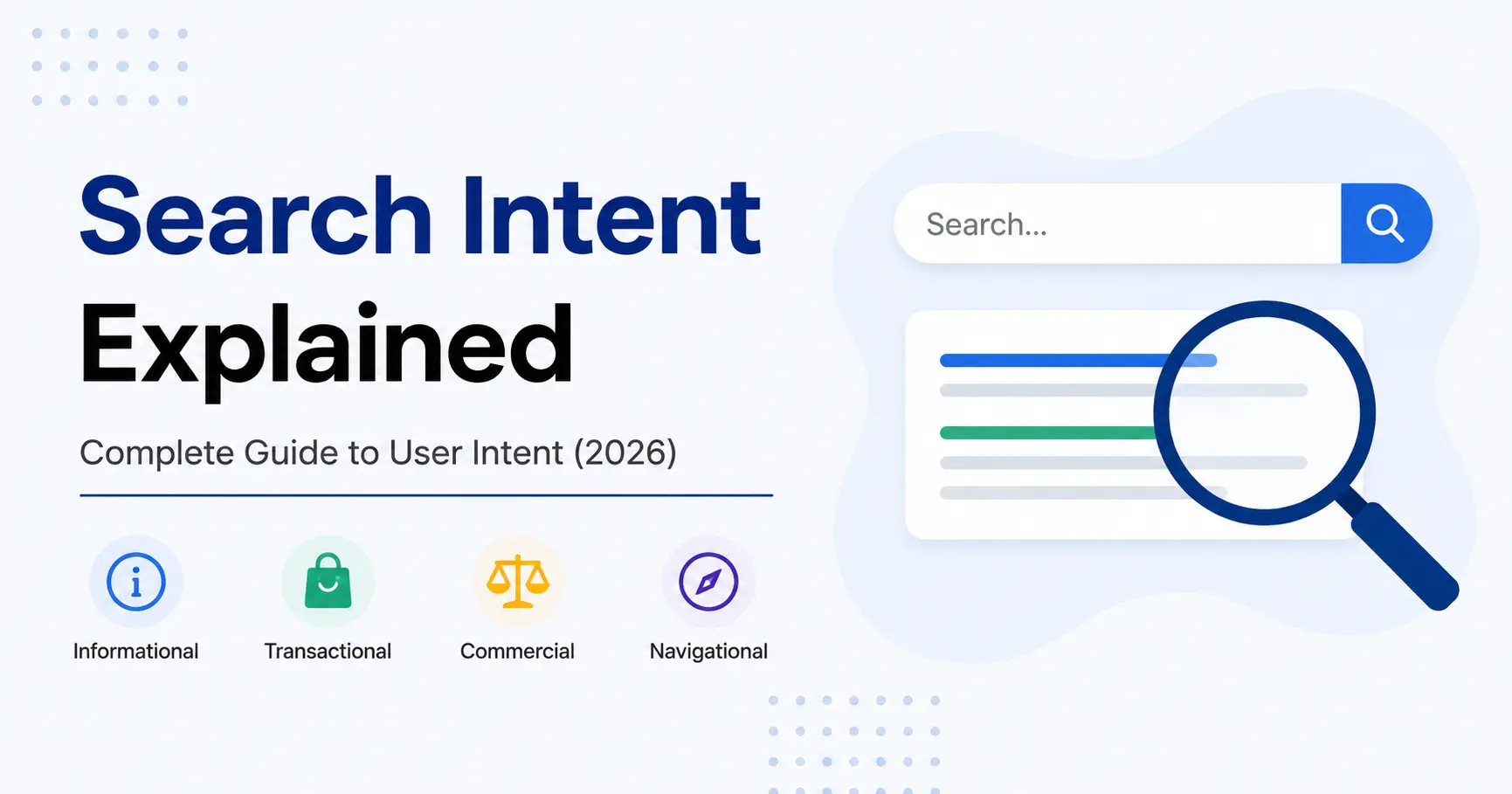
Google primarily identifies four types of search intent:
- Informational Intent
- Navigational Intent
- Commercial Investigation Intent
- Transactional Intent
Let’s explore each type in detail.
1. Informational Intent
What Is Informational Intent?
Informational intent occurs when users want to learn something, find an answer, or understand a topic. They are looking for knowledge rather than making an immediate purchase.
These users are typically in the awareness stage of the customer journey.
Common Search Examples
- What is SEO?
- How does Google rank websites?
- Search intent explained
- How to bake a chocolate cake
- Best programming languages for beginners
- What is artificial intelligence?
What Users Expect
When someone performs an informational search, they expect:
- Clear explanations
- Step-by-step guides
- Definitions
- Examples
- Visuals
- FAQs
- Easy-to-read content
Best Content Types
- Blog posts
- Tutorials
- Ultimate guides
- Infographics
- Educational videos
- Glossaries
- Checklists
Example
Search Query:
What is Search Intent?
Expected Results:
- Definition
- Explanation
- Types
- Examples
- FAQs
Not expected:
- Product pages
- Pricing pages
- Sales landing pages
Pro Tip
Add concise definitions near the beginning of informational articles. This increases the chances of earning Featured Snippets and appearing in AI-generated answers.
2. Navigational Intent
What Is Navigational Intent?
Navigational intent means the user already knows which website, brand, or page they want to visit. They use Google as a shortcut instead of typing the URL directly.
Search Examples
- Facebook Login
- Gmail
- MyInfoMint
- Google Search Console
- WordPress Dashboard
- YouTube Studio
- Ahrefs Blog
What Users Expect
Users want:
- The official website
- Login page
- Specific service page
- Brand homepage
Best Content Types
- Homepage
- Brand pages
- Login pages
- Contact pages
- Documentation
- Knowledge base
Example
Search:
Google Search Console
Expected Result:
Google’s official Search Console page.
Not Expected:
A general article explaining Google tools.
3. Commercial Investigation Intent
What Is Commercial Investigation Intent?
Commercial investigation occurs when users are researching products or services before making a decision.
They are interested but not yet ready to buy.
These users compare options, read reviews, and evaluate features.
Search Examples
- Best SEO tools
- Ahrefs vs Semrush
- Best web hosting for WordPress
- Top keyword research tools
- Best laptops under $1000
- Rank Math review
What Users Expect
They want:
- Honest comparisons
- Reviews
- Pros and cons
- Pricing
- Feature breakdowns
- Alternatives
- Buying advice
Best Content Types
- Comparison articles
- Review posts
- Buying guides
- Top 10 lists
- Case studies
Example
Search:
Best Keyword Research Tools
Expected Results:
- Tool comparisons
- Pricing
- Features
- Pros
- Cons
- Recommendations
4. Transactional Intent
What Is Transactional Intent?
Transactional intent indicates the user is ready to take action.
This action may include:
- Buying a product
- Booking a service
- Downloading software
- Registering for a webinar
- Signing up for a free trial
Search Examples
- Buy iPhone 17
- Hire SEO Agency
- Download Canva Pro
- Order Pizza Online
- Register Domain Name
- Buy Running Shoes
What Users Expect
Users expect:
- Product pages
- Checkout pages
- Pricing
- Offers
- Discounts
- Free trial
- Contact forms
Best Content Types
- Product pages
- Service pages
- Landing pages
- Pricing pages
- Sales pages
Example
Search:
Buy Wireless Mouse
Google usually shows:
- Shopping results
- Product listings
- E-commerce websites
- Local stores
Not:
- History of computer mice
Comparison Table: The Four Types of Search Intent
| Search Intent | User Goal | Common Keywords | Best Content |
| Informational | Learn something | What, How, Guide, Tutorial | Blog posts, Guides, Videos |
| Navigational | Visit a website | Brand name, Login, Official | Homepage, Login page |
| Commercial Investigation | Compare options | Best, Review, Vs, Top | Comparison articles, Reviews |
| Transactional | Complete an action | Buy, Order, Subscribe, Download | Product pages, Landing pages |
Search Intent Across the Customer Journey
Understanding where users are in their journey helps you create the right content for each stage.
| Customer Stage | Search Intent | Example Query | Recommended Content |
| Awareness | Informational | What is SEO? | Educational blog |
| Consideration | Commercial Investigation | Best SEO tools | Comparison guide |
| Decision | Transactional | Buy SEO software | Product page |
| Loyalty | Navigational | Ahrefs Login | Official page |
Real-World Search Intent Examples
Example 1: Digital Marketing
Keyword:
Digital Marketing
Possible Intent:
- Learn digital marketing (Informational)
- Find a course (Commercial)
- Hire an agency (Transactional)
- Visit a specific agency (Navigational)
Example 2: WordPress
Keyword:
WordPress
Possible Intent:
- Learn WordPress
- Download WordPress
- WordPress Login
- Best WordPress Hosting
Each search represents a different intent despite using the same core keyword.
Example 3: SEO
Searches:
- What is SEO?
- SEO Checklist
- Best SEO Agency
- Ahrefs vs Semrush
- Hire SEO Expert
Each query requires different content, even though all relate to SEO.
How to Identify Search Intent
Before writing content, determine what users actually want.
Follow these practical steps.
Step 1: Analyze Google Search Results
Search your target keyword in an incognito window.
Ask yourself:
- Are the top results blog posts?
- Are they product pages?
- Are videos dominating?
- Are comparison articles ranking?
- Is there a Local Pack?
- Are Shopping Ads displayed?
The existing SERP often reveals Google’s understanding of the query.
Step 2: Look at SERP Features
Google provides additional clues through SERP features.
Featured Snippet
Usually indicates informational intent.
Shopping Results
Suggest transactional intent.
Local Pack
Indicates local transactional or navigational intent.
People Also Ask
Highlights informational questions users commonly ask.
Videos
Suggest users benefit from visual explanations.
Step 3: Examine the Wording
Certain words strongly indicate intent.
| Keyword Modifier | Likely Intent |
| What | Informational |
| How | Informational |
| Why | Informational |
| Tutorial | Informational |
| Guide | Informational |
| Best | Commercial Investigation |
| Review | Commercial Investigation |
| Compare | Commercial Investigation |
| Vs | Commercial Investigation |
| Pricing | Commercial Investigation |
| Buy | Transactional |
| Order | Transactional |
| Discount | Transactional |
| Near Me | Transactional / Local |
| Login | Navigational |
| Official | Navigational |
| Website | Navigational |
Step 4: Use Keyword Research Tools
Most SEO tools classify search intent automatically.
Popular options include:
- Google Keyword Planner
- Google Search Console
- Ahrefs
- Semrush
- Moz
- Ubersuggest
- Mangools
Always verify tool suggestions by reviewing the actual search results.
Step 5: Understand the User’s Problem
Instead of asking:
“What keyword should I target?”
Ask:
“What problem is the user trying to solve?”
This mindset leads to more relevant, helpful, and engaging content.
Search Intent Analysis Checklist
Before publishing a page, review the following checklist:
- Does the content answer the user’s primary question?
- Does it match the dominant intent shown in Google?
- Is the page format appropriate (guide, comparison, product page, etc.)?
- Are examples included?
- Are headings clear and descriptive?
- Is the information current for 2026?
- Does the content provide actionable advice?
- Does it answer related questions users may have?
- Are internal links included?
- Does the page encourage the next logical action?
Mini Case Studies
Case Study 1: Blog Success
A blogger targets the keyword:
Technical SEO Checklist
Instead of creating a 500-word overview, they publish a comprehensive guide with examples, screenshots, FAQs, and downloadable checklists.
Result:
- Better user engagement
- Increased organic traffic
- Higher likelihood of ranking for long-tail queries
The content succeeds because it fully satisfies informational intent.
Case Study 2: E-commerce Improvement
An online store targets:
Best Gaming Laptop
Rather than directing users to a product page, they first publish a comparison guide covering features, performance, and buying considerations, with links to recommended products.
Result:
- More qualified visitors
- Improved trust
- Higher conversion potential
This approach aligns with commercial investigation intent.
Case Study 3: Local Business Visibility
A plumbing company optimizes for:
Emergency Plumber Near Me
They create a location-specific service page with contact details, service areas, testimonials, and structured data.
Result:
- Increased visibility in local search
- Better alignment with transactional intent
- More service inquiries
Expert Insight
One of the most common SEO mistakes is creating the wrong type of content for the target keyword. A product page rarely ranks for an informational query, and a general blog post is unlikely to perform well for a high-intent purchase keyword. Before writing, study the search results and let user intent guide your content strategy.
How to Optimize Content for Search Intent
Understanding search intent is only half the battle. The real SEO advantage comes from creating content that perfectly aligns with what users expect to find.
When your content satisfies user intent, visitors stay longer, engage more, and are more likely to complete the desired action. These positive signals help search engines recognize your page as a valuable result.
Let’s explore how to optimize your content for every type of search intent.
Step 1: Identify the Primary Search Intent
Before writing a single word, determine the dominant intent behind your target keyword.
Search the keyword in Google and examine the first page of results.
Ask yourself:
- Are most results blog posts?
- Do you see product pages?
- Are comparison articles ranking?
- Are videos appearing?
- Is there a Featured Snippet?
- Are Shopping results displayed?
- Is there a Local Pack?
If 8 out of 10 top-ranking pages are detailed guides, Google expects informational content—not a sales page.
Example
Keyword:
Technical SEO Checklist
Top Results:
- Comprehensive guides
- Checklists
- Tutorials
Best Content Format:
✔ Long-form educational article
Not:
❌ Product landing page
Step 2: Match the Right Content Format
Different search intents require different page types.
| Search Intent | Best Content Format |
| Informational | Blog posts, guides, tutorials, FAQs |
| Navigational | Homepage, login page, brand page |
| Commercial Investigation | Comparison articles, reviews, buying guides |
| Transactional | Product pages, pricing pages, landing pages |
Creating the wrong format often leads to poor rankings, even if the content is well-written.
Step 3: Answer the Main Question Immediately
Many users—and AI search engines—look for quick, direct answers.
Start your article with a concise definition or summary before diving into detailed explanations.
Example
What is Search Intent?
Search intent is the purpose behind a user’s search query. It reflects what the user wants to learn, compare, find, or buy, helping search engines deliver the most relevant results.
This approach also improves your chances of earning a Featured Snippet.
Step 4: Cover the Topic Completely
Google rewards comprehensive content that answers related questions within a single resource.
Instead of writing only about “What is Search Intent?”, include:
- Why search intent matters
- Types of search intent
- Examples
- Common mistakes
- Optimization techniques
- FAQs
- Latest trends
- Best practices
Comprehensive content reduces the need for users to return to search results.
Step 5: Use Semantic SEO
Modern search engines understand concepts, not just exact keywords.
Instead of repeating “Search Intent” dozens of times, naturally include related terms such as:
- User intent
- Search behavior
- Keyword intent
- Search queries
- User expectations
- Search experience
- Search relevance
- Semantic search
- Content optimization
This helps search engines understand the broader topic.
Step 6: Optimize Headings
Clear headings improve readability for users and help search engines understand your content structure.
Good Heading Structure
H1
Search Intent Explained
H2
What Is Search Intent?
H2
Why Search Intent Matters
H2
Types of Search Intent
H3
Informational Intent
H3
Navigational Intent
H3
Commercial Investigation
H3
Transactional Intent
Logical heading hierarchy makes your content easier to scan and improves accessibility.
Step 7: Include Helpful Visuals
Visual content enhances user understanding and engagement.
Recommended visuals include:
- Infographics
- Comparison tables
- Flowcharts
- Diagrams
- Screenshots
- Checklists
- Icons
Example
Flowchart:
Keyword Research
        ↓
Analyze SERP
        ↓
Identify Search Intent
        ↓
Choose Content Type
        ↓
Create Helpful Content
        ↓
Optimize SEO
        ↓
Publish & Monitor
Search Intent and Content Mapping
Content mapping ensures you create the right page for every stage of the customer journey.
| Customer Journey Stage | Search Intent | Recommended Content |
|---|---|---|
| Awareness | Informational | Blog posts, guides, tutorials |
| Consideration | Commercial Investigation | Reviews, comparisons, buying guides |
| Decision | Transactional | Product pages, pricing pages, landing pages |
| Retention | Navigational | Help center, login pages, account resources |
Search Intent Trends for 2026
Search continues to evolve as AI becomes more integrated into search experiences.
1. AI-Powered Search Experiences
Platforms such as Google AI Overviews, ChatGPT, Gemini, Claude, and Perplexity increasingly summarize content instead of displaying only links.
Content should be structured to provide concise answers followed by deeper explanations.
2. Entity-Based SEO
Search engines rely more on understanding entities (people, organizations, places, products, and concepts) and their relationships.
Use accurate names, define important concepts, and maintain topical consistency.
3. Topical Authority
Publishing one excellent article is no longer enough.
Building a network of high-quality, interconnected articles demonstrates expertise and improves overall visibility.
4. Search Experience Optimization (SXO)
SEO now extends beyond rankings.
Search Experience Optimization combines:
- Helpful content
- Fast page speed
- Mobile responsiveness
- Clear navigation
- Strong user experience
Pages that satisfy users are more likely to perform well over time.
5. Zero-Click and AI-Assisted Searches
Many users now receive answers directly within search results or AI assistants.
To remain visible:
- Provide concise definitions.
- Structure content logically.
- Use FAQ sections.
- Include tables and summaries.
- Offer additional value beyond the initial answer.
Expert Insight
Search intent is the foundation of modern SEO. Before researching keywords, designing a page, or writing a single paragraph, ask one simple question:
“What does the user really want to accomplish?”
When your content consistently answers that question better than competing pages, you’re not just optimizing for search engines—you’re creating a better experience for your audience. That alignment is what drives sustainable organic growth.