Quick Answer
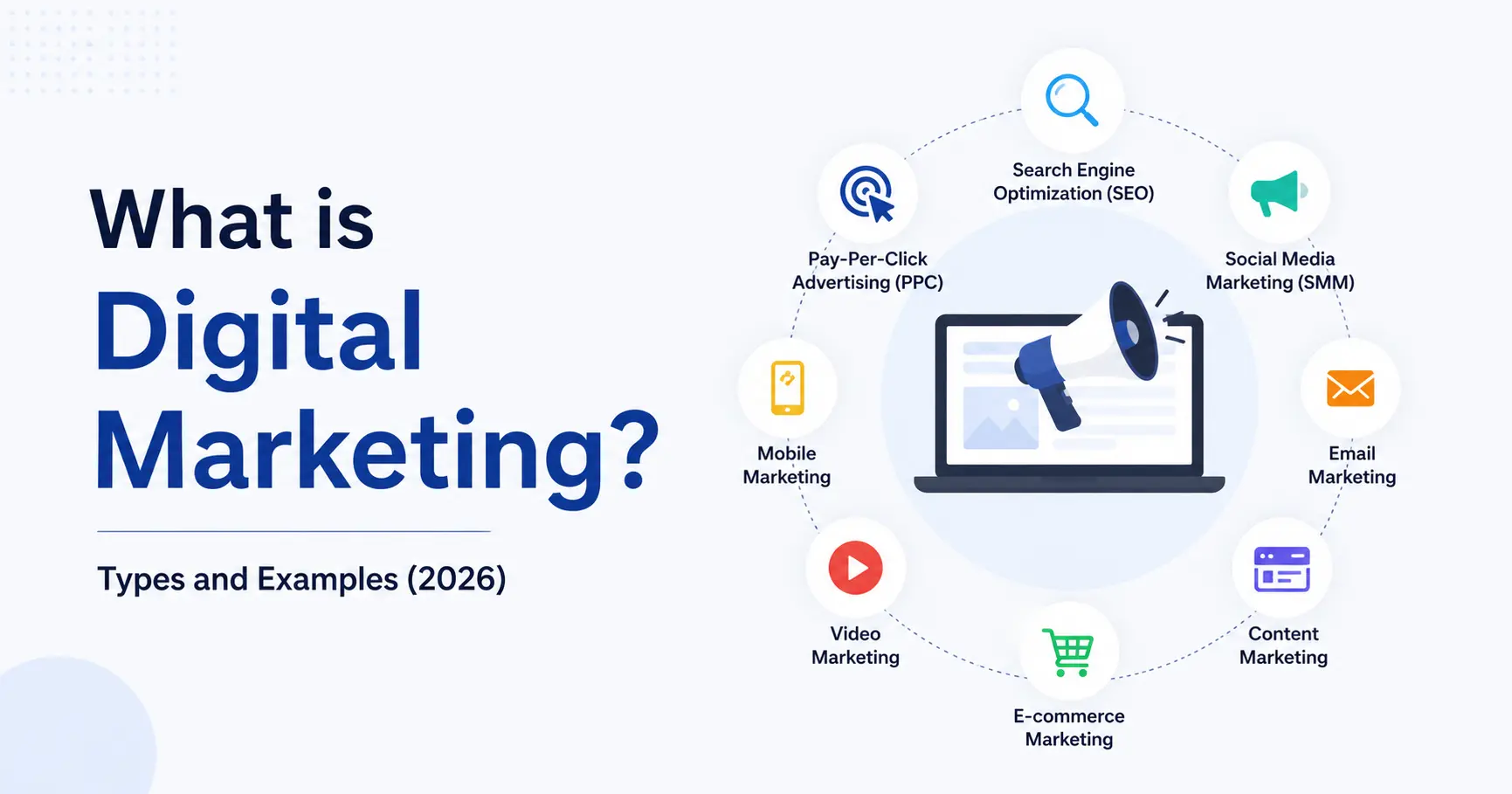
Digital marketing is the practice of promoting products, services, or brands using online channels like search engines, social media, email, and websites, instead of traditional methods like TV, print, or billboards. The main types of digital marketing include SEO, content marketing, social media marketing, email marketing, paid advertising, affiliate marketing, and influencer marketing. Businesses use it because it’s more measurable, more affordable, and reaches people exactly where they already spend their time, online.
What is Digital Marketing?
Digital marketing simply means marketing that happens through digital channels, the internet, mobile apps, search engines, social media, and email, rather than offline methods like newspapers, TV ads, or flyers.
If a business posts on Instagram to promote a product, sends a discount email to past customers, or writes a blog post to show up on Google, all of that falls under this umbrella. The core idea hasn’t changed from traditional marketing, get the right message in front of the right people, but it happens through channels people use every single day on their phones and computers.
What makes it different from traditional marketing is that almost everything can be tracked and measured. You can see exactly how many people saw an ad, clicked it, and bought something. Traditional marketing, like a billboard or a TV commercial, doesn’t give you that level of detail.
Why Digital Marketing Matters for Businesses
It has become the primary way most businesses grow today, for a few clear reasons:
- Lower cost compared to traditional advertising — a small business can run a social media campaign for a fraction of what a TV ad costs
- Precise targeting — you can show ads to people based on age, location, interests, or even what they searched recently
- Real-time results — you know within hours or days whether a campaign is working, instead of waiting weeks
- Wider reach — a well-optimized website or social post can reach people across the world, not just a local area
- Builds long-term trust — consistent effort, especially through content and SEO, builds a brand people recognize and trust over time
Whether it’s a small local shop or a global company, it is now considered essential rather than optional.
Types of Digital Marketing
It isn’t just one activity it’s a mix of different strategies that often work together. Here are the main types.
1. Search Engine Optimization (SEO)
SEO is the process of improving your website so it ranks higher in search engine results, like Google, without paying for ads. If you’ve ever wondered what is SEO exactly, it comes down to three parts: creating content people search for, optimizing your pages technically, and building trust through backlinks. SEO takes time, but it delivers long-term, consistent traffic without ongoing ad spend.
2. Content Marketing
Content marketing means creating valuable content blog posts, videos, guides, infographics to attract and engage an audience. It works closely with SEO, since well-written content built around real keyword research is what actually gets found on Google. Good content marketing builds trust before it ever asks for a sale.
3. Social Media Marketing
This involves promoting a brand, product, or service through platforms like Instagram, Facebook, LinkedIn, and TikTok. It can be organic (regular posts, engagement, community building) or paid (running ads directly on these platforms). Social media marketing is especially strong for building brand awareness and connecting directly with an audience.
4. Email Marketing
Despite being one of the older marketing methods, email marketing remains one of the highest-return strategies available. Businesses use it to nurture leads, announce new products, share offers, and keep past customers coming back usually at a very low cost per message sent.
5. Pay-Per-Click (PPC) Advertising
PPC is a paid advertising model where you pay only when someone clicks your ad. Google Ads and social media ad platforms are the most common examples. Unlike SEO, PPC delivers instant visibility, but the traffic stops as soon as you stop paying.
6. Affiliate Marketing
In affiliate marketing, businesses pay other people or websites a commission for promoting their products and driving sales. It’s a performance-based approach you only pay when it actually results in a sale or lead.
7. Influencer Marketing
This involves partnering with people who have an established, engaged audience usually on social media to promote a product or service. It works well because it borrows the trust an influencer has already built with their followers.
Real-World Examples of Digital Marketing
To make this practical, here’s what it actually looks like in action:
- A clothing brand running Instagram ads targeted at people who recently searched for similar products
- A software company publishing blog posts (like this one) to answer common questions their potential customers are searching for
- A restaurant sending a weekly email with special offers to past customers
- A skincare brand partnering with a beauty influencer to review their product on YouTube
- A local plumber optimizing their Google Business Profile so they show up when someone nearby searches “plumber near me”
Each of these is an example in a different form, but they all share the same goal reaching the right audience through digital channels.
Digital Marketing vs Traditional Marketing
| Digital Marketing | Traditional Marketing |
|---|---|
| Measurable results (clicks, views, conversions) | Hard to measure exact impact |
| Generally lower cost | Often expensive (TV, print, billboards) |
| Highly targeted audiences | Broad, less targeted reach |
| Fast to launch and adjust | Slower to launch and change |
| Works well for both small and large businesses | Often better suited to large budgets |
This doesn’t mean traditional marketing is useless — for certain local or older audiences, it can still work well. But for most modern businesses, it offers better control, better tracking, and better return on investment.
How to Start Learning Digital Marketing
If you’re new to this field and want to build real skills, here’s a simple starting order:
- Learn the basics of SEO how search engines work and how content gets found
- Understand keyword research knowing what people actually search for
- Practice writing content that’s genuinely useful, not just promotional
- Learn one social media platform deeply rather than trying to master all of them at once
- Understand basic analytics Google Search Console and Google Analytics are a great free starting point
This field is broad, but you don’t need to master every type at once. Most professionals start by getting good at one channel, then expand from there.
Frequently Asked Questions
Is digital marketing hard to learn?
Not particularly. The basics SEO, content, social media can be learned through free resources and practice. What takes time is mastering strategy and seeing real results, which usually comes with consistent hands-on experience.
What is the most important type of digital marketing?
There isn’t one “most important” type it depends on your goals. SEO and content marketing both offer strong long-term value. Paid ads offer instant results. Most successful marketing strategies combine several types together.
Can a beginner do digital marketing without a big budget?
Yes. SEO, content marketing, organic social media, and email marketing can all be done with little to no budget mainly requiring time and consistency instead of money.
Is digital marketing a good career in 2026?
Yes, demand for these skills continues to grow as more businesses shift their budgets from traditional advertising to online channels.
Final Takeaway
Digital marketing covers every way a business promotes itself online from SEO and content to social media, email, and paid ads. Understanding the different types helps you see how they work together, whether you’re running a business or starting a career in the field. The best way to actually learn it is to start with one channel, get real practice, and build from there.
At My Info Mint, we are not affiliated with any brand, product, or service mentioned on our website. Our goal is to provide informative and research-based content to help our readers. Please verify product or service information on the official website before making any decisions. The information provided is for educational purposes only.